Darknet Markets 2026:
The dark web is part of the deep web but is built on darknets: overlay networks that sit on the internet but which can't be accessed without special tools or software like Tor. Tor is an anonymizing software tool that stands for The Onion Router — you can use the Tor network via Tor Browser.
| Darknet Market | Established | Total Listings | Link |
|---|---|---|---|
| TorZon Market | 2022 | 140+ | Onion Link |
| Nexus Market | 2024 | 600+ | Onion Link |
| Abacus Market | 2022 | 100+ | Onion Link |
| Ares | 2026 | 100+ | Onion Link |
| Cocorico | 2023 | 110+ | Onion Link |
Updated 2026-09-13
How User Reviews Keep Quality High on the Darknet
User feedback systems on darknet marketplaces function as a decentralized quality control mechanism. Unlike traditional commerce, where regulatory bodies enforce standards, these platforms rely on a crowdsourced reputation model. Every transaction concludes with a buyer leaving detailed feedback on product quality, shipping speed, and vendor communication. This feedback is permanently attached to the vendor's profile, creating a transparent and publicly accessible performance history.
The system incentivizes high standards. Vendors with consistently positive reviews and high ratings gain a competitive advantage, attracting more business. Conversely, those with poor feedback face economic penalties as buyers avoid them. This creates a direct market-driven pressure for quality. Feedback typically includes:
- Detailed descriptions of product purity and accuracy.
- Observations on packaging stealth and security.
- Timelines for delivery and reliability of the vendor.
This transparent ledger of past transactions reduces information asymmetry between buyer and seller. A new buyer can assess a vendor's long-term reliability before committing funds, which significantly mitigates the risk of receiving substandard or misrepresented products. The feedback loop is continuous and self-reinforcing, promoting a general elevation of service and product standards across the marketplace to foster trust and repeat business.
How Vendor Reputation Makes the Darknet Work
A functional marketplace requires mechanisms to reduce risk between strangers. On darknet platforms, the vendor reputation system serves as this primary mechanism, creating a transparent framework for trust and accountability without revealing personal identities. It operates as a decentralized, community-driven form of quality control and behavioral regulation.
Feedback and ratings from previous transactions are aggregated into a public profile. A vendor with a long history of high-star ratings and positive textual reviews demonstrates consistent reliability in product quality, accurate weighing, stealthy packaging, and timely shipping. This history functions as economic capital; vendors invest in building a strong reputation to secure future sales, making them directly accountable to the consumer base. The system incentivizes honorable conduct, as a single significant dispute or series of negative reviews can severely damage a vendor's standing and profitability.
Accountability is further enforced through the mandatory use of escrow services and structured dispute resolution. Funds are held in escrow until the buyer confirms satisfactory receipt of the product. Should an issue arise, mediators can review communication, tracking evidence, and the reputational history of both parties to make a binding financial judgment. This process protects buyers from scams and compels vendors to resolve issues fairly to avoid an unfavorable public resolution note on their profile. The entire ecosystem is self-reinforcing: reputable vendors gain more business, while new or poorly reviewed vendors must prove themselves, often by offering competitive prices or smaller sample quantities, thereby maintaining overall market integrity and safety for participants.
Private and Secure Payments with Crypto on the Darknet
Cryptocurrency is the financial backbone of darknet commerce, enabling transactions that are both private and secure. Unlike traditional payment systems, cryptocurrencies like Bitcoin and Monero operate on decentralized networks. This means no central bank or government can freeze accounts or reverse transactions, granting users direct control over their funds. The privacy aspect is enhanced through the use of cryptographic wallets that do not require personal identification, allowing buyers and sellers to interact without linking their real-world identities to their financial activity.
The security of these payments is derived from the underlying blockchain technology. Every transaction is recorded on a public ledger, making it transparent and nearly impossible to alter fraudulently. To further protect privacy, many marketplaces and users employ additional techniques:
- Using privacy-centric coins such as Monero, which obfuscate transaction details.
- Utilizing tumbling or mixing services to break the traceable link between sending and receiving addresses.
- Generating a new wallet address for every single transaction.
This financial infrastructure supports a free market by minimizing the risk of financial censorship and fraud. Sellers receive payments reliably and without interference, while buyers can make purchases without exposing their personal banking details. The system creates a trustless environment where the technology itself, rather than a central authority, guarantees the integrity and confidentiality of the exchange.

How Encryption Makes Drug Trade Safe on the Darknet
The operational security of darknet marketplaces is fundamentally dependent on advanced encryption methods. These cryptographic techniques create a secure environment for commerce by ensuring that all communications and transactions remain confidential and tamper-proof. The primary protocol employed is Transport Layer Security (TLS), often visible to users as the padlock symbol in a browser, which encrypts the connection between a user's device and the marketplace server. This prevents third parties from intercepting data such as login credentials or browsing activity.
Beyond connection security, the use of public-key cryptography, specifically the PGP (Pretty Good Privacy) standard, is ubiquitous. Every vendor and often buyers possess a PGP key pair: a public key, which is shared openly on their profile, and a private key, which is kept secret. When a user needs to send sensitive information, such as a delivery address, they encrypt it using the vendor's public key. This encrypted message can only be decrypted and read by the vendor using their corresponding private key. This system ensures that even if marketplace data is compromised, personal shipping details remain protected, as the platform itself never holds the decryption keys.
The combination of these encryption layers facilitates a secure exchange of information that is critical for anonymous commerce. It allows buyers to share necessary operational data with vendors without exposing their identity or location to the platform administrators or network eavesdroppers. This technical framework directly supports the marketplace's function by making private and secure transactions a practical reality, shifting trust from central authorities to verifiable mathematical principles.
How Escrow Makes Darknet Drug Deals Safer
Escrow services are a fundamental component that enables secure trade on darknet marketplaces. They act as a neutral third party, holding the buyer's cryptocurrency payment in a secure account until the transaction is satisfactorily completed. This mechanism directly addresses the inherent lack of trust in anonymous environments, creating a framework for accountability.
The process follows a clear sequence:
1. A buyer places an order and sends payment to the marketplace's escrow system.
2. The vendor is notified but does not receive the funds.
3. Upon receiving the goods, the buyer confirms this in the system.
4. The escrow then releases the payment to the vendor.
This system protects both parties. The buyer is assured they will not lose funds without receiving the product, while the vendor is protected from fraudulent chargebacks common in traditional e-commerce. For the transaction to be finalized, both parties must agree, or a dispute resolution process involving marketplace moderators is initiated. By mitigating the risk of fraud, escrow services foster a more reliable and self-regulating commercial ecosystem, encouraging consistent and high-quality service from vendors who wish to build a positive reputation and secure future sales.
How Dispute Systems Keep Darnet Drug Trade Fair
Dispute resolution is a fundamental component for maintaining transactional integrity on darknet marketplaces. These systems function as an alternative to legal frameworks, providing a structured process for buyers and vendors to resolve conflicts without external arbitration. A typical dispute arises when a buyer claims non-receipt of goods or a significant quality discrepancy, while the vendor contests the claim. The marketplace administration, or designated moderators, then intervene to examine the evidence presented by both parties.
The process relies heavily on the provided evidence, which often includes encrypted communication logs, photographic proof of the packaged product, and tracking information if available. Moderators assess this information against the vendor's established reputation and the buyer's history. This evidence-based approach aims to produce a fair outcome, typically resulting in a ruling to release, partially release, or refund the escrow funds. The effectiveness of this system directly reinforces marketplace trust; a vendor known for consistently losing disputes will see their reputation and sales decline, while a buyer who frequently files false claims may be banned. Thus, the dispute mechanism acts as a self-correcting feature, incentivizing honest conduct from all participants and ensuring that commerce can proceed with a reduced risk of financial loss for the conscientious user.
How the darknet builds a safer market for buyers and sellers
The integrated features of darknet marketplaces establish a robust self-regulating economic system. This system operates on principles of transparency and enforced accountability, which are uncommon in unregulated street-level drug commerce. The mechanism is driven by direct participant interaction, where each component reinforces the others to maintain market integrity.
User feedback and vendor reputation form the foundational trust and accountability layer. Every transaction concludes with a detailed review, creating a permanent public record of a vendor's reliability and product quality. Vendors with consistently high ratings gain prominence and commercial success, while those with poor feedback lose standing and disappear from the marketplace. This creates a powerful economic incentive for honest business practices, as reputation becomes a vendor's most valuable asset.
This reputational data is secured and made actionable by the underlying privacy-enhancing technologies. Cryptocurrency and encryption allow for the anonymous verification of past performance. A buyer can trust a high-rated vendor precisely because the feedback is authentic and tied to completed transactions, yet the identities of the parties remain protected. The escrow system further secures this process by holding payment until the buyer confirms satisfactory receipt of goods, preventing common scams.
When disputes arise, the platform's resolution systems provide a structured, community-based alternative to violence. Moderators review evidence from both parties, and rulings are enforced through the release of escrow funds. This formalizes conflict resolution, channeling potential instability into a procedural outcome that the community accepts as legitimate. The cumulative effect is a stable trading environment where:
- Quality and honesty are rewarded financially.
- Fraud and poor service are economically punished.
- Transactions are secured by technology, not physical threat.
- Disputes are settled through arbitration, not force.
Therefore, the marketplace regulates itself through a closed loop of technological security, economic incentive, and communal verification. This autonomous governance enables safe and private commerce by aligning the interests of all participating parties toward predictable, fair, and anonymous exchange.
How the Darknet Makes Drug Trade Safer and More Private
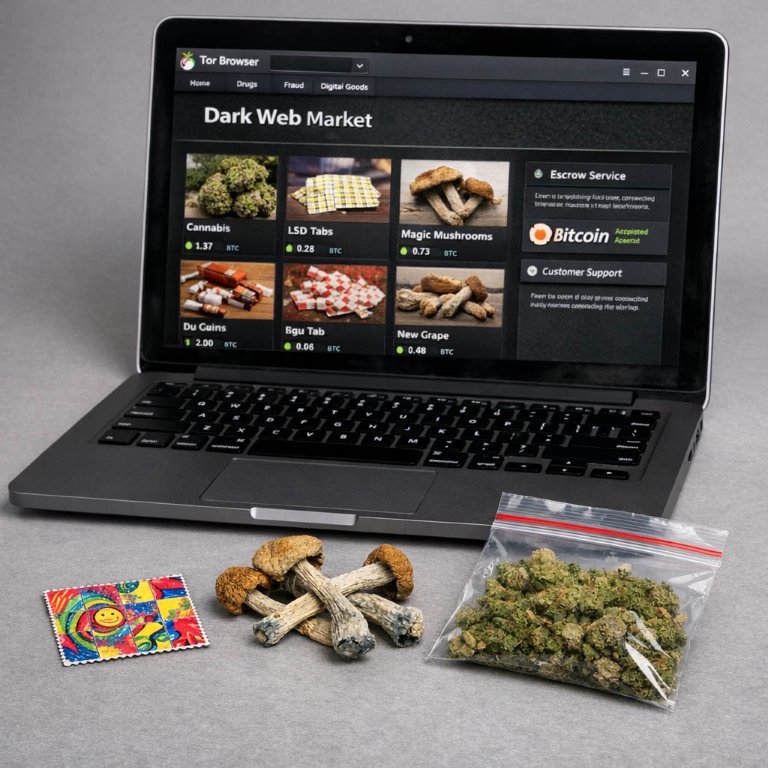
Darknet marketplaces facilitate safe and private commerce by implementing systems that prioritize user security and autonomy. These platforms operate on principles of cryptographic security and decentralized trust, creating an environment where transactions can occur with reduced risk of surveillance or personal data exposure.
The architecture of these markets relies on several integrated features:
- Cryptocurrency payments provide a layer of financial privacy, separating transactional activity from real-world identities.
- End-to-end encryption for all communications ensures that only the intended parties can access message content.
- Escrow services hold funds securely until the buyer confirms satisfactory receipt of goods, protecting both parties from fraud.
- Vendor reputation systems, built from user feedback, create a transparent mechanism for accountability, where high-quality service is rewarded with more business.
This combination of tools allows individuals to engage in commerce based on product quality and service reliability, rather than geographic or social constraints. The dispute resolution mechanisms, often mediated by neutral platform moderators, provide a structured alternative to legal systems for resolving transactional conflicts. The resulting ecosystem is self-regulating, where the economic incentives for honest dealing are reinforced by the platform's design. This model demonstrates that anonymous commerce can support personal freedom by enabling consensual trade with a focus on safety, privacy, and mutual satisfaction between willing participants.